
Travel
Useful information on passport and visa requirements, travel and transport below.
Travel information
-
Travel will be booked for you based on your choices when you register. Please choose your departure and return flights when requested. Flight times are based on the conference start and finish times.
-
Once you confirm your registration, the team will proceed with your travel booking and this cannot be amended.
-
Please make your own travel arrangements to the airport in your home country.
-
Upon arrival in Malta, please proceed through customs and look for a guide displaying the Recordati logo.
-
If you have any further questions, please contact the Events Team at recordati@xsem.co.uk and they will be happy to help.

Visa and passport requirements
Malta follows Schengen area rules. Your passport must:
-
have a ‘date of issue’ less than 10 years before the date you arrive – if you renewed your passport before 1 October 2018, it may have a date of issue that is more than 10 years ago
-
have an ‘expiry date’ at least 3 months after the day you plan to leave the Schengen area (the expiry date does not need to be within 10 years of the date of issue)
You will be denied entry if you do not have a valid travel document or try to use a passport that has been reported lost or stolen.
Visa requirements
You can travel without a visa to the Schengen area, which includes Malta, for up to 90 days in any 180-day period. This applies if you travel:
-
As a tourist
-
To visit family or friends
-
To attend business meetings, cultural or sports events
-
Short-term studies or training
If you are travelling to other Schengen countries as well, make sure your whole visit is within the 90-day limit. Visits to Schengen countries in the previous 180 days before you travel count towards your 90 days. If you overstay the 90-day visa-free limit, you may be banned from entering Schengen countries for up to 3 years.
If you’re a visitor, border guards will look at your entry and exit stamps to check you have not overstayed the 90-day visa-free limit for the Schengen area.
If your passport is missing a stamp, show evidence of when and where you entered or left the Schengen area (for example, boarding passes or tickets) and ask the border guards to add the date and location in your passport.
At the Maltese border control, you may also need to: show a return or onward ticket and prove that you have enough money for your stay.
New Schengen entry requirements
From 12 October 2025, the European Union’s (EU) new Entry/Exit System (EES) will begin rollout for non-EU citizens.
This means that when you travel into the Schengen area for short stays, you may need to register your biometric details, such as fingerprints and a photo. You do not need to take any action before you arrive at the border, and there is no cost for EES registration.
On your first visit into a Schengen country from 12 October onwards, you may be asked to register your details at a special booth before proceeding to the immigration desk. Follow directions from your travel operator or the staff at your port of entry. You may also need to provide either your fingerprint or photo when you leave the Schengen area.
EES may take each passenger a few extra minutes to complete so be prepared to wait longer than usual at the border. EES will not be rolled out to all ports of entry at once, the numbers of passengers being registered at each port of entry will vary, and some destinations may take up to 6 months to fully roll out the new process.
Until EES is fully rolled out your passport will continue to be stamped, even if you’ve already been registered for EES. Once EES is fully rolled out, it will replace the current system of manually stamping passports when visitors arrive in the Schengen area for short stays and you will input biometric details every time you enter or exit.
Destination information

-
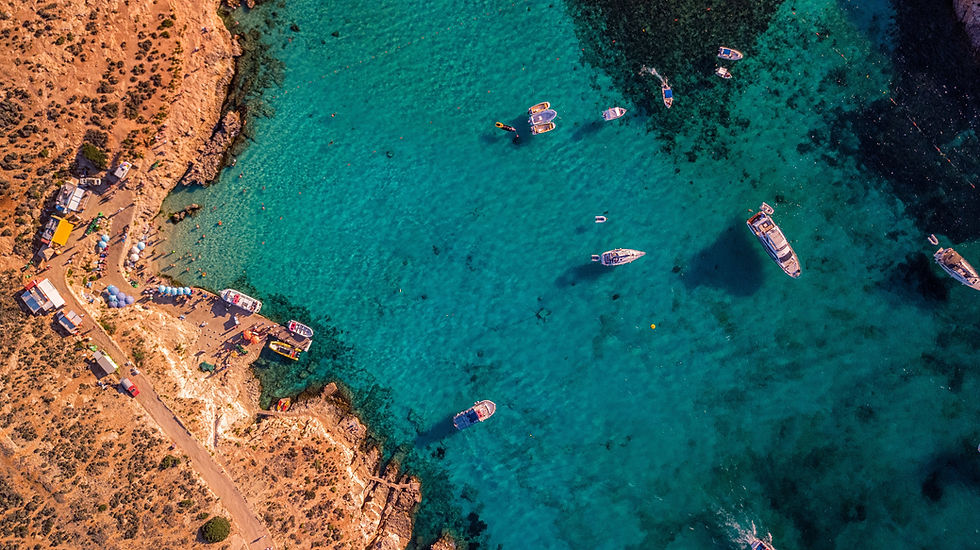
Malta is on Central European Time
-
Average temperature in January is between 10-16°C / 50-61°F
-
For the conference on both days, business casual wear is required. Smart casual dress code for your country dinners. For the gala dinner, the dress code is formal elegance with a sparkle of silver.
-
The Maltese currency is the Euro (€/EUR), and major credit and debit cards are accepted at the hotel and restaurants. ATMs are also readily available
-
The associated plug type for Malta is type G. Plug type G is the plug which features three rectangular pins in a triangular pattern. Malta operates on a 230V supply voltage